
Key Points
Water problems don’t always announce themselves in obvious ways. Sometimes it’s the chalky residue left on a bathroom tap. Other times, the drinking water has an unpleasant aftertaste, or the kettle seems to collect mineral deposits almost as soon as you’ve cleaned it. These little annoyances can become part of everyday life, but they don’t…
Water problems don’t always announce themselves in obvious ways. Sometimes it’s the chalky residue left on a bathroom tap. Other times, the drinking water has an unpleasant aftertaste, or the kettle seems to collect mineral deposits almost as soon as you’ve cleaned it. These little annoyances can become part of everyday life, but they don’t have to stay that way.
The tricky part is knowing which solution actually makes sense. Not every home needs an elaborate filtration setup, and buying the first product advertised as a complete water solution can lead to unnecessary expense. Different problems call for different approaches, from reducing hardness minerals to improving drinking-water taste or addressing specific contaminants.
A good starting point is to understand what’s happening with your water, how your household uses it, and which treatment options are designed to help.
Understanding What Your Water Needs
Before choosing equipment, take a moment to notice the problems you’re experiencing. Does soap struggle to lather? Are there white marks on shower screens? Does drinking water taste strongly of chlorine? Perhaps the water looks cloudy after a plumbing repair.
These clues can help narrow down the possibilities, although they don’t provide a complete picture of water quality. Hardness, for example, is caused mainly by dissolved calcium and magnesium. Sediment may come from the supply or plumbing, while an unusual taste can have several different causes.
If you’re uncertain, a suitable water test is often a better investment than guessing. Testing can identify particular concerns and help determine which treatment method is appropriate. This matters because a system designed to reduce hardness won’t necessarily remove unwanted chemicals, and a basic sediment filter won’t address every dissolved substance.
Once you understand the problem, comparing products becomes much less confusing. Instead of searching for the most powerful system, you can focus on the one that meets your household’s actual needs.
Dealing With Hard Water and Mineral Buildup
Hard water is common in many areas, and its effects are usually noticed around the house rather than in a glass of drinking water. White deposits build up on taps, showerheads and kettles. Soap may leave a film on bathroom surfaces, and some appliances can develop scale over time.
For households dealing with these frustrations, water conditioners & softeners may offer a practical solution. However, conditioners and softeners don’t always work in the same way, so it’s worth understanding the distinction before making a purchase.
Traditional water softeners generally use ion exchange to reduce calcium and magnesium, replacing them with other ions, commonly sodium. This can help reduce scale formation and make cleaning easier. Salt-free conditioning technologies, on the other hand, may change how minerals form or attach to surfaces without removing the hardness minerals themselves.
That difference matters. A conditioner might be suitable for someone mainly concerned about scale, while a conventional softener may be more appropriate when reducing measured water hardness is the priority.
Consider your plumbing, household water consumption and maintenance preferences. Some softeners require salt replenishment and periodic regeneration, while other systems have different servicing needs. If drinking-water sodium levels are a concern, discuss suitable options with a qualified professional rather than assuming every softener is identical.
Making Drinking Water Easier to Access
Sometimes the issue isn’t hardness or staining at all. You simply want convenient access to drinking water without repeatedly buying bottled water or finding room for large containers in the refrigerator.
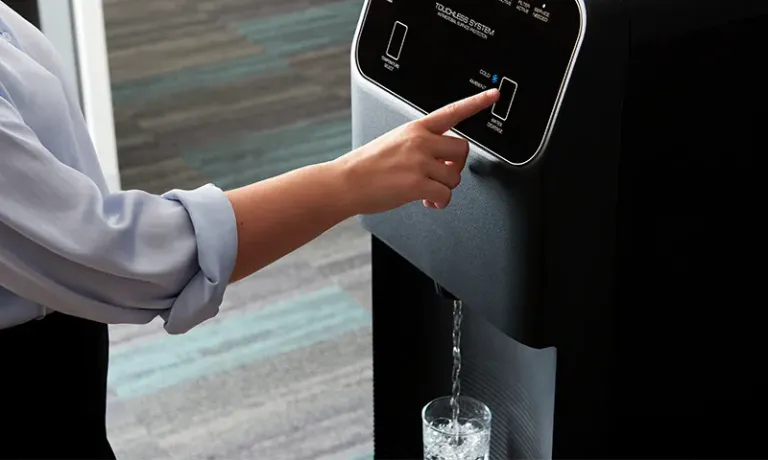
A dedicated dispenser can make everyday hydration easier, especially in busy households and workplaces. People can refill reusable bottles, pour a quick glass between tasks or prepare a hot drink without waiting for a kettle.
Modern bottleless coolers & dispensers connect to a suitable water supply instead of relying on large replacement bottles. Depending on the model, they may provide chilled, ambient and hot water, with optional filtration to improve taste or reduce particular contaminants.
For an office, this can simplify water management by reducing bottle deliveries and the need for storage space. At home, a compact unit may fit neatly into a kitchen or utility area, making drinking water accessible throughout the day.
Still, bottleless equipment isn’t automatically the best choice for every property. The location needs an appropriate connection, and the incoming water should be suitable for the selected unit. Installation costs, filter replacement and electricity use should also be included when comparing long-term expenses.
Pay attention to cleaning instructions, too. Dispensers need regular care, particularly around taps and outlets where people frequently touch the equipment. A convenient source of water should also be a well-maintained one.
When Standard Filtration Isn’t Enough
Basic filtration can improve certain aspects of water, but some situations call for more targeted treatment. A household may have a specific concern about dissolved substances, a private well may require additional testing, or laboratory results may identify a contaminant that needs a particular removal method.
This is where specialty filtration systems can become relevant. Depending on the problem, options may include reverse osmosis, ultraviolet disinfection, specialised adsorptive media or other technologies designed for particular contaminants.
Reverse osmosis uses a semipermeable membrane to reduce many dissolved substances. Ultraviolet treatment can inactivate susceptible microorganisms when the system is correctly designed and operated, but it doesn’t remove dissolved salts or particles. Certain specialised filters can target particular chemicals, though their effectiveness depends on the media, water conditions and product specifications.
In other words, there’s no single technology that solves every water-quality problem. A system that works well for one contaminant may have little effect on another.
If you’re considering advanced treatment, start with reliable test results and check the manufacturer’s performance claims carefully. Independent certification can help verify whether a product has been evaluated for the specific reduction you’re seeking.
This is especially important for private wells, where water quality can change and testing may need to cover microbiological as well as chemical concerns. If contamination is suspected, use appropriate safe-water guidance while the issue is investigated rather than relying on taste or appearance.
Installation and Maintenance Deserve Attention
Even a suitable treatment system can disappoint when it’s installed incorrectly or neglected. Poor connections may leak, an undersized unit may struggle to supply enough water, and an overdue filter can affect flow or treatment performance.
Before installation, check the available space, plumbing requirements, water pressure and access needed for future servicing. Some systems need drainage or electricity, while others have simpler requirements. A qualified installer can help confirm that the equipment suits the property and is configured according to the manufacturer’s instructions.
After installation, keep a record of filter changes, service visits and any changes in water quality. Follow the recommended replacement intervals rather than waiting until the equipment stops working. If unusual tastes, leaks or sudden pressure changes appear, investigate the cause instead of assuming a routine filter change will fix everything.
Maintenance costs should be part of the original buying decision. An inexpensive system that requires costly cartridges every few months may not offer better value than a slightly more expensive model with manageable servicing needs.
Choosing a Solution That Fits Your Life
The best water treatment setup is rarely the one with the longest feature list. It’s the one that addresses a genuine problem, fits the property’s water supply and remains practical to maintain.
Start with testing where appropriate. Compare treatment methods based on verified performance, ask about installation and replacement parts, and consider how much water your household uses each day. If several problems are present, a combination of technologies may be more suitable than relying on a single device.
Most importantly, avoid paying for treatment you don’t need. Better water isn’t about having the most complicated equipment under the sink or in the utility room. It’s about making informed choices that improve everyday comfort and address real concerns.
Once the right solution is in place, the benefits can be pleasantly ordinary: fewer stubborn deposits, more convenient drinking water, easier cleaning and greater confidence in how your water is treated. Sometimes, that’s exactly what a good home improvement should deliver.
Related Posts
Keeping Industrial Water Systems Reliable With the Right Technical Expertise
Water plays a bigger role in business operations than many people realize. It…
Finding a Water Treatment Company You Can Feel Confident About
Good water makes everyday life easier in ways we don’t always notice. It…

When Your Home Needs Better Water: Understanding Whole-House Water Treatment
Water has a funny way of becoming invisible in our routines. We use…
